
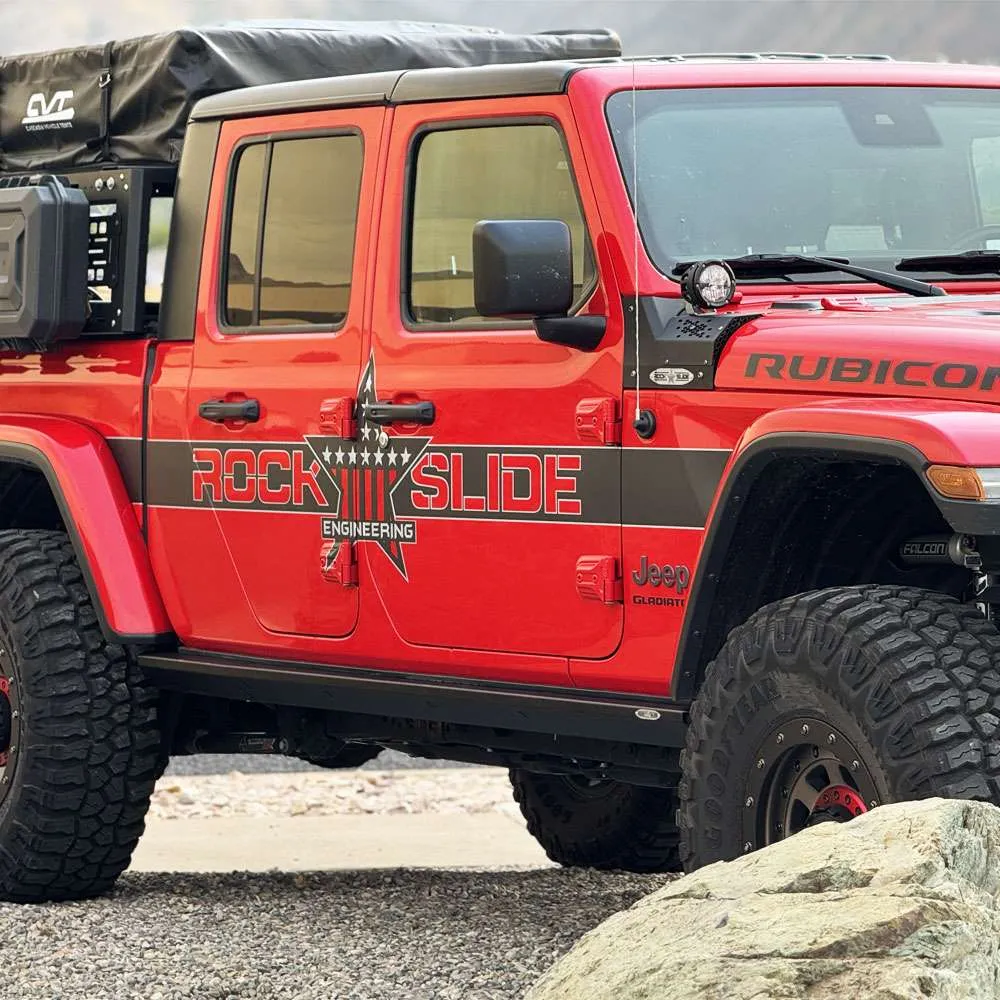
Your Gladiator doesn’t stop being a truck just because it sees trail time on weekends. That’s why jeep gladiator rock rails for daily driving need to do more than survive a hit on the rocks. They need to protect the body, give you practical access, and avoid turning every grocery run or school pickup into a climb.
A lot of Gladiator owners buy rails with one thing in mind – armor. Fair enough. The rocker area is vulnerable, and body damage gets expensive fast. But if your JT is also your commuter, family hauler, or road-trip rig, the right rail has to handle the daily grind just as well as a rough line off-road.
What daily driving changes about your rail choice
On a trail-only build, compromise is easier. You can live with tighter entry, more road grime on your pants, or a step surface that is really just a tube. For a daily-driven Gladiator, those trade-offs hit harder because you deal with them every single day.
The first issue is access. A lifted Gladiator on bigger tires can get tall in a hurry. If you have kids, passengers, or anyone shorter getting in regularly, a pure rock rail without usable step area may get old fast. Protection matters, but so does not having to grab the steering wheel and launch yourself into the seat.
The second issue is clearance. Daily drivers rack up miles in parking lots, drive-thrus, curbs, and bad pavement. You want rails that tuck up tight and don’t hang low enough to become the first thing scraping on normal obstacles. A well-designed rail should protect the rocker without making your truck feel clumsy around town.
Then there’s finish and durability. A Gladiator that lives outside, sees weather, and gets washed regularly needs rails that can handle road salt, rain, and repeated use. The coating, hardware, and mounting design matter more on a truck that gets used constantly than on one that only comes out for trail weekends.
Jeep Gladiator rock rails for daily driving should do three jobs
The best setup usually handles protection, access, and fitment at the same time. If one of those is missing, you feel it.
Protection is the obvious job. Rock rails are there to shield the rocker panels and lower body from trail damage, stumps, ruts, and debris kicked up off-road. On a Gladiator, that protection is worth thinking through because the truck wheelbase changes how it moves over terrain. You may be more likely to contact certain obstacles than you would in a shorter Jeep.
Access is the job many buyers underestimate. A daily-driven JT often needs a real stepping surface, not just something technically possible to stand on if you place your foot perfectly. A broader, more stable step area is easier to use in work boots, in the rain, or when helping someone into the cab.
Fitment is where cheap options usually show their weaknesses. Platform-specific design matters. You want rails that match the Gladiator’s body lines, mount securely, and don’t look like an afterthought bolted under the truck. Clean fitment is not just cosmetic. It affects strength, clearance, and how usable the rail is day to day.
Pure rock rail or step slider
This is the real decision for most owners.
A pure rock rail puts trail protection first. It usually tucks close to the body, keeps a tighter profile, and gives better confidence when you know the truck is going to meet rock. If your Gladiator sees serious off-road use and you care more about armor than convenience, this style still makes sense.
But for daily driving, a step slider often lands in the sweet spot. It gives you rocker protection with a more usable stepping surface. That matters on lifted trucks, and it matters even more if other people drive or ride in the vehicle. A rail that works for you but annoys everyone else is not always the best call.
There is a trade-off, though. Some step-focused designs hang lower or stick out farther than a tighter rock rail. That can affect breakover feel and trail clearance. The right answer depends on how your Gladiator is actually used. If you run moderate trails, overland, commute, and carry passengers, a well-built step slider often gives you more overall value than a bare-bones rail.
Clearance, width, and how the truck feels every day
Daily comfort is usually won or lost in small design details.
If the rail sits too close to the body and offers very little step area, entry can feel awkward, especially with a lift. If it sticks out too far, it can catch pant legs, collect more road spray, and make the truck feel wider than it already is in parking spots. Good rails strike a balance – enough width to use as a step, not so much that they become a constant nuisance.
The same goes for height. Tight, high-clearance mounting is great for protection and appearance, but it still has to be usable. On a Gladiator built for both workweek miles and weekend trails, smart engineering is about balance, not extremes.
Material and construction matter more than specs on paper
Most buyers look first at steel thickness and weight rating. Those matter, but they do not tell the full story. Mounting points, gusseting, weld quality, and how the rail transfers force into the vehicle all affect real-world durability.
For daily use, construction also affects long-term feel. A solid rail should feel planted underfoot, not flexy or hollow. It should hold up to repeated use getting in and out of the cab, not just survive occasional impacts. If the truck is part adventure build and part daily tool, the rail has to do both jobs without drama.
What to watch for if your Gladiator is lifted
A small lift can change the conversation. A bigger tire package changes it even more.
Once ride height goes up, access becomes a real factor for almost everyone. You may be comfortable climbing in, but passengers often aren’t. That is where step-friendly rock rails earn their keep. They keep the truck practical without giving up the protection that made you shop for rails in the first place.
Lifted trucks also put more visual focus on the lower body. Poorly fitted rails stand out immediately. So does a design that looks too small, too low, or out of proportion with the build. On a Gladiator, especially one with larger tires and other armor, the right rail should look intentional and match the rest of the truck’s stance.
Weather, road grime, and everyday abuse
Trail rash gets the attention, but daily abuse is relentless. Mud, slush, salt, and wet boots will test your rails just as much as the occasional rocky obstacle.
A usable step surface should still work when it is dirty or wet. Finish quality matters because these parts live in the blast zone from front tire spray. Hardware matters because nobody wants rust streaks or seized fasteners down the road. If you plan to keep your Gladiator for years, not just seasons, pay attention to how the system is built and finished.
This is one reason premium, vehicle-specific systems stand apart. Better engineering usually shows up in the details you notice later – tighter fit, cleaner install, better footing, and less frustration after thousands of miles.
When power steps or specialty step sliders make sense
Some Gladiator owners want the tight profile of armor with easier entry when the door opens. That is where advanced step-slider systems can make a lot of sense. They give you access when you need it and keep things tucked when you don’t.
That kind of setup is especially attractive for daily-driven builds with lifts, families, or regular passenger use. It can also help if you want a cleaner look than a permanently protruding side step. Rock Slide Engineering built its reputation around this blend of protection and accessibility because it solves a real problem for people who use their rig every day, not just on trail weekends.
Of course, more specialized systems bring more complexity and cost. For some owners, a fixed rail with a well-designed step is the simpler answer. For others, the convenience is worth it. It depends on how often people climb in and out and how much you care about keeping the profile tight.
How to choose the right setup for your truck
Be honest about use before you buy. If your Gladiator spends 90 percent of its life commuting, hauling gear, and carrying passengers, choose rails that make daily life easier. If you wheel hard enough to drag the sliders regularly, lean harder into protection. Most owners are somewhere in the middle.
Think about who uses the truck, how high it sits, where it gets driven, and whether you want a true step or just emergency foothold access. Also think long term. The best rail is not the one that looks toughest in a product photo. It is the one that still works for your truck six months from now, after rain, mud, parking lots, and a few hard trail days.
A Gladiator built right should not force you to choose between protection and practicality. The right rock rails let you leave the pavement, handle the hit, and still make Monday morning feel easy.